.png)


Healing from Complex Trauma and PTSD: Embracing Freedom Through Understanding and Renewal


Click on image to watch a short video
Previous Webinar Video - Mind, Body, Spirit Connection from Trauma. How does it affect your body and make you sick.
PTSD, Trauma, and the Path to Healing - Webinar as follows:
What Trauma and PTSD really is - is it a spirit, disease, or syndrome
Why do some people develop PTSD and others do not
How trauma affects the body
How fear gets trapped in the nervous system
Generational patterns and epigenetics
And most importantly… how healing and freedom are possible through renewing the mind, healing emotional wounds, and restoring peace.
Practical steps to release trauma and move into freedom - special prayer (broken heart, broken mind - Amyglia, removing body memories and triggers.
Trauma is not a spirit, and PTSD is not weakness. Trauma is an experience that can open the door to fear, anxiety, stress, and emotional bondage. PTSD happens when the mind and body stay trapped in fear long after the traumatic event is over.
Many people think PTSD only affects war veterans, but it can also follow abuse, neglect, car accidents, medical trauma, sudden loss, domestic violence, sexual assault, or fear-filled childhood environments. Not everyone who experiences trauma develops PTSD, which raises an important question: why do some people recover while others remain stuck in survival mode?
You will learn the answer by attending the FREE Deliverance Webinar on May 18.
Trauma affects both the mind and the body. When danger arises, the body enters a state of fight, flight, freeze, or shock. Stress hormones like adrenaline and cortisol prepare the body to survive. But when the body never fully returns to a state of peace, the nervous system can remain on high alert. This can lead to flashbacks, abreactions, nightmares, panic attacks, anxiety, emotional triggers, sleep problems, exhaustion, brain fog, and feeling constantly unsafe.
Fear keeps PTSD alive by replaying the trauma and training the body to expect danger. The more fear is rehearsed, the stronger the pathway becomes. This is why healing requires more than managing symptoms. The mind must be renewed and healed, the heart must be healed, the body's memories removed, and fear must be confronted with truth.
Scripture says, “For God hath not given us the spirit of fear; but of power, and of love, and of a sound mind” (2 Timothy 1:7 KJV). God’s desire is not for His people to live in torment, but in peace, freedom, and restored identity.
How many of you see a psychiatrist? Did you know psychiatrists only deal with the soul and not the spirit of a man? Carl Young saw “archetypes” and “shadows,” recognizing that many internal struggles seemed connected to longstanding family patterns, but didn't see the spiritual side.
Healing begins when you bring the pain, memories, fear, and confusion to God. The event may remain part of your past, but it does not have to control your future. As you cast your cares on Him, renew your mind with His Word, forgive, come out of isolation, and build safe, godly relationships, new pathways of peace can begin to form.
There is no single timeline for recovery. For some, healing happens quickly. For others, it is a daily walk with God. But healing is possible. Giving yourself mercy, grace, and love. No comparing yourself with others. Trauma does not get to define you. Fear does not get to name you. Your past does not get the final word.
The question is: who will define your future—your trauma, your fear, your past, or the Word of God?
This post explores how trauma impacts us on multiple levels and offers insights into the path toward healing. It also invites you to join a free Healing & Deliverance Webinar on May 18, 2026, at 7:00 PM CST, where you can learn more about understanding, releasing, and renewing your mind with support.
Special Prayer after deliverance. Healing the Broken Heart, the Broken Mind - amygdala - the fear center, and much more. Fear and Threat Detection: The central nucleus (CeA) regulates fear responses, such as freezing or increased heart rate, by controlling cortisol release.
Key Functions of the Amygdala:
Emotional Processing: It evaluates sensory information for emotional significance, assigning valence and intensity values to stimuli.
Fear and Threat Detection: The central nucleus (CeA) regulates fear responses, such as freezing or increased heart rate, by controlling cortisol release.
Memory Consolidation: It works with the hippocampus to "save" memories tied to strong emotions, ensuring important experiences are remembered.
Behavior Regulation: It helps adapt behavior to environmental cues, thereby affecting decision-making and motivation.
How Trauma Affects the Body, Mind, and Spirit
Previous Webinar - Trauma is more than a memory or event. It leaves an imprint on the body, mind, and spirit.
Trauma repeatedly triggers the body’s stress response, even long after the event. This can cause chronic tension, fatigue, headaches, digestive issues, and heightened alertness. The nervous system stays on edge, making it hard to relax or feel safe.
Trauma repeatedly triggers the body’s stress response, even long after the event. This can cause chronic tension, fatigue, headaches, digestive issues, and heightened alertness. The nervous system stays on edge, making it hard to relax or feel safe.
Relevant Scriptures
Philippians 4:6-7: "Do not be anxious about anything, but
Luke 4:18 - Jesus came to heal the brokenhearted.....
Mind: Trauma disrupts how the brain processes emotions and memories. It can cause intrusive thoughts, flashbacks, difficulty concentrating, and a sense of confusion. Anxiety and fear often dominate, making everyday tasks feel overwhelming.
Spirit: Trauma can shake a person’s sense of meaning, trust, and connection. It may lead to feelings of isolation, despair, or loss of hope. The spirit longs for peace and restoration but may feel blocked or numb.
Understanding these layers helps us see why trauma is so complex and why healing requires attention to all parts of ourselves.
The Lingering Effects of Trauma on Daily Life
Trauma does not always stay locked in the past. It often follows people into their present, shaping how they feel and act.
Anxiety and Fear: Many who have experienced trauma live with a constant sense of danger. This can show up as panic attacks, avoidance of certain places or people, or a general feeling of unease.
Emotional Numbness: To protect themselves, some people shut down emotionally. They may feel disconnected from their own feelings or from others, making relationships and joy difficult.
Hypervigilance: Trauma survivors often remain on high alert, scanning for threats. This can cause exhaustion and make it hard to focus on anything but survival.
Difficulty Trusting: Trauma can break trust in others and in oneself. This makes it challenging to build new relationships or seek help.
These effects can interfere with work, family life, and personal growth. Recognizing them is the first step toward change.
FREEDOM

The journey of healing often begins with finding a peaceful path forward.
Healing Is Possible and More Than Coping
Healing from trauma and PTSD is not about simply surviving or managing symptoms. It is about moving toward true freedom—freedom from fear, pain, and emotional barriers.
Healing means:
Understanding: Gaining insight into how trauma affects your body and mind. This awareness helps reduce confusion and self-blame.
Releasing: Letting go of the grip trauma has on your emotions and thoughts. This can happen through therapy, support groups, mindfulness, or spiritual practices.
Renewing: Building new patterns of thinking, feeling, and relating. Renewal brings hope, connection, and a sense of purpose.
Many people find that healing is a gradual process with ups and downs. It requires patience, courage, and support. But it is possible to reclaim your life and experience joy again.
The Importance of Support in Healing
Healing trauma alone can feel overwhelming. Support from others plays a crucial role in recovery.
Professional Help: Therapists trained in trauma-informed care can guide you through safe and effective healing methods.
Community: Connecting with others who understand your experience reduces isolation and builds strength. Touch of God has a Thrive Walkout Group to help you.
Spiritual Guidance: For many, faith and spiritual practices provide comfort, meaning, and a sense of renewal.
Self-Care: Simple daily habits like rest, nutrition, movement, and mindfulness support the body and mind.
Healing is not a solo journey. It thrives in a network of understanding and encouragement.
Join the Free Healing & Deliverance Webinar
If you or someone you know is struggling with trauma or PTSD, consider joining the Healing & Deliverance Webinar on May 18, 2026, at 7:00 PM CST. This free event offers practical tools and compassionate guidance to help you. Register today at https://www.touchofgod.org/events/free-webinar-registration
Understand how trauma affects your whole being
Learn ways to release emotional pain safely to stop the flashbacks and stop the cycle of reliving the event over and over.
Discover how to renew your mind and spirit with support
This webinar creates a space for healing and hope. You do not have to carry your pain alone. Together, you can move toward freedom.
Healing from trauma is a journey of courage and transformation. By understanding how trauma impacts your body, mind, and spirit, you can begin to release its hold and renew your life. Support is available, and true freedom is within reach.
Teresa Morin, Founder of Touch of God Int'l Ministries
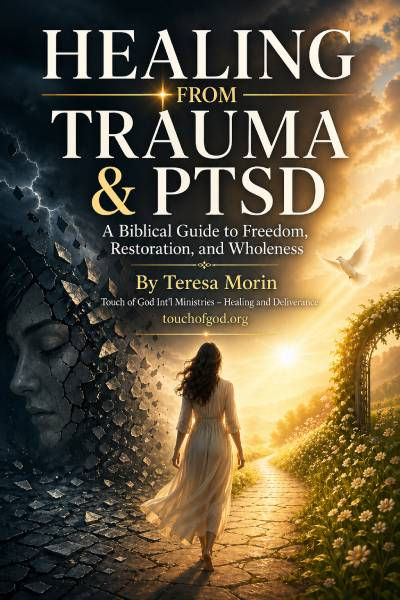

Book from previous Webinar - Get the book


.png)


I would love to read this.